Captains Quarters

Cliënt:

private

Program:

Residential

Location:

Windwardside, Saba

Year:

2023

Status:

Under construction

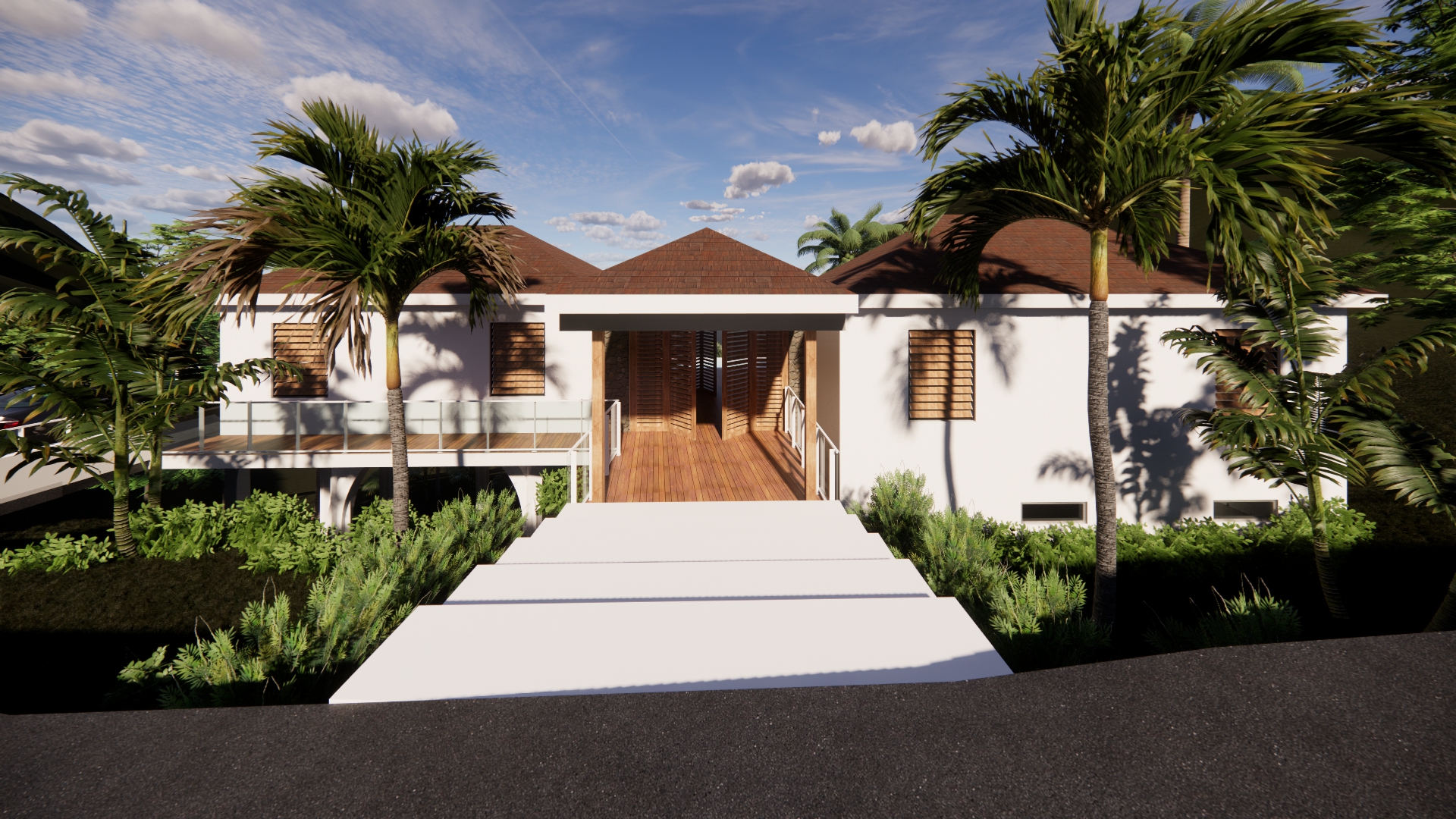
We are working on a reconstruction of Captains Quarters on Saba. This historic building is being transformed into a residential home.

Originally a 19th-century whaling captain’s house, Captains Quarters was later expanded and converted into one of the island’s finest hotels. While reconstruction is not always the obvious choice, in this case it was the right one.

Authenticity

Given the building’s layered history and its significance in the island’s past, we and the client agreed that reconstruction was essential. It was the location where important, historical conversations took place. But the hotel was destroyed by hurricane George back in 1998.

During the design process, we confronted key questions: How do you preserve the heritage values of a place and its building? How can authenticity be maintained in a reconstruction? And when a monument is rebuilt with new materials, is it still truly authentic? These questions are sparking lively discussions within the heritage community. In this case reconstruction was the only viable option because of the building’s crucial role in Saba’s history.

Collecting pictures

How do you make a design of something that has been destroyed? We based our design on old schematic drawings from the book Monuments of Saba (2005) and on archive-photos that we collected from the local community. We gathered images from as many angles as possible to find out what it looked like. Right down to the details.

We noted that the building resembled traditional Saban houses, with its white facade and red roof. The stonework featured white joints, typical of more important buildings on the island. We carefully recreated the shingle façade finish seen in the photos and designed the railing banisters based on the historic images of Captain’s Quarters. These visual references guided us to create an authentic reconstruction rooted in the building’s original character.

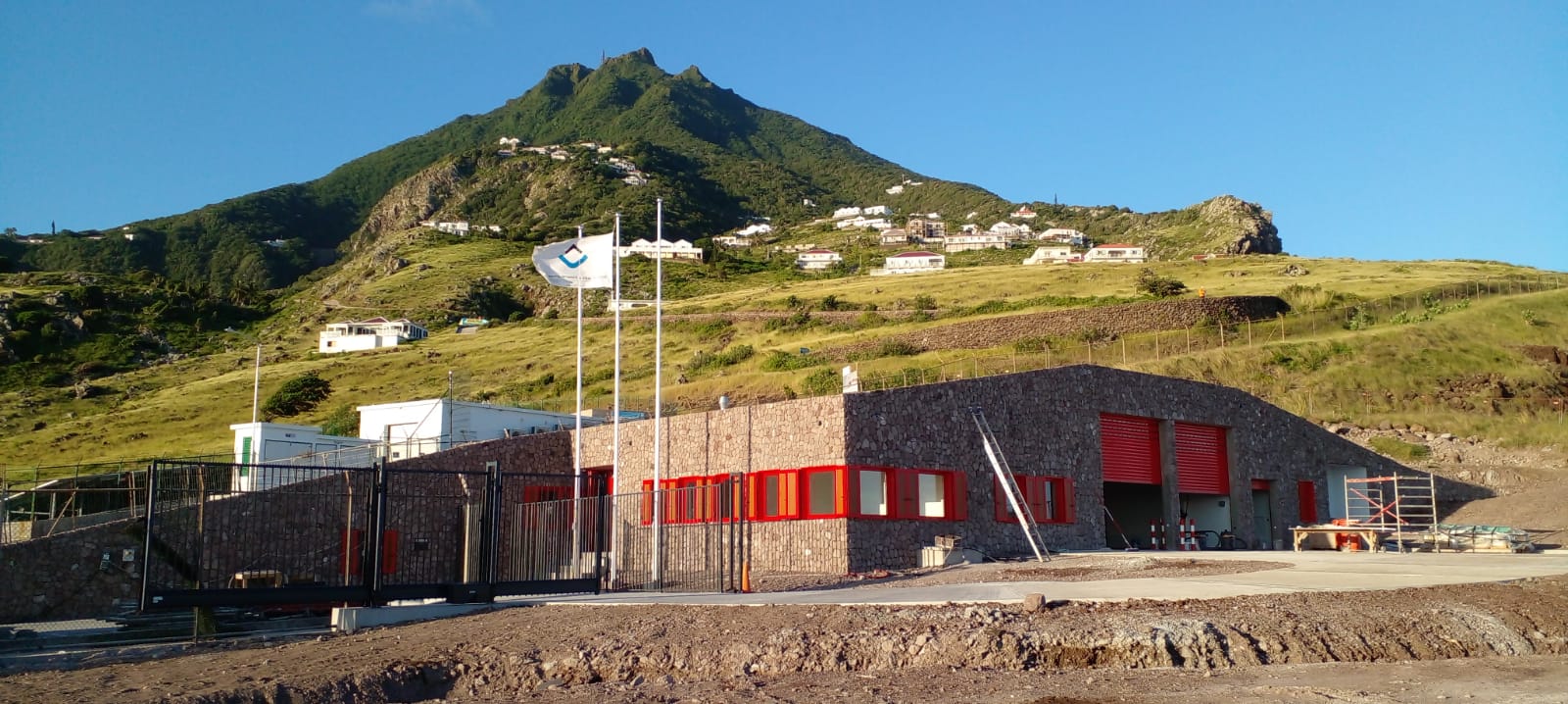
Though the building is not officially a monument, we treated it as one. This meant making choices that honor historical accuracy. For example, the new stones used for the building’s base were cut into square blocks with lightly pronounced joints, replicating the traditional technique used on important historic structures.

Sustainability

Since there is no municipal water supply on the island, a rainwater tank is installed beneath the building. This water will be used for all non-potable purposes, conserving precious resources.

The original interior of Captain’s Quarters was largely made of wood, with vertical planks on the wall. We have brought that back into our design, though with a more modern appearance. The wooden paneling has been given a special washing treatment, creating an aesthetically refined look that aligns with contemporary design trends.

Modern adjustments

This wasn’t the only update to bring the building into the present day. We have also enhanced the building’s performance by incorporating modern insulation, including an insulated roof to reduce heat gain—a feature still uncommon on Saba but essential for comfort.

Because the house was completely destroyed during the hurricane, we used heavier lumber for the frame to enhance durability. Yet, aside from this, we stayed as close as possible to the typical wood frame houses of Saba. The lumber for the structure was pre-manufactured and partially assembled in Maine by the Shelter Institute, then shipped to Saba for construction.

Besides the wood frame, the rest of the home was built using traditional methods. The contractor took great care to hide steel anchors—necessary for hurricane resistance—demonstrating the specialized carpentry skills and deep respect required for such a reconstruction.

Planning

We designed the reconstruction back in 2017, but construction didn’t begin until 2023. The building process is happening in phases, allowing us to make adjustments as needed. For example, we discovered more suitable materials along the way—an interesting and valuable part of the journey. The project is scheduled for completion in 2025.

Gallery

Team:

Lyongo Juliana

Construction by:

Robbie Hassel

We are working on a reconstruction of Captains Quarters on Saba. This historic building is being transformed into a residential home.

Originally a 19th-century whaling captain’s house, Captains Quarters was later expanded and converted into one of the island’s finest hotels. While reconstruction is not always the obvious choice, in this case it was the right one.

Authenticity

Given the building’s layered history and its significance in the island’s past, we and the client agreed that reconstruction was essential. It was the location where important, historical conversations took place. But the hotel was destroyed by hurricane George back in 1998.

During the design process, we confronted key questions: How do you preserve the heritage values of a place and its building? How can authenticity be maintained in a reconstruction? And when a monument is rebuilt with new materials, is it still truly authentic? These questions are sparking lively discussions within the heritage community. In this case reconstruction was the only viable option because of the building’s crucial role in Saba’s history.

Collecting pictures

How do you make a design of something that has been destroyed? We based our design on old schematic drawings from the book Monuments of Saba (2005) and on archive-photos that we collected from the local community. We gathered images from as many angles as possible to find out what it looked like. Right down to the details.

We noted that the building resembled traditional Saban houses, with its white facade and red roof. The stonework featured white joints, typical of more important buildings on the island. We carefully recreated the shingle façade finish seen in the photos and designed the railing banisters based on the historic images of Captain’s Quarters. These visual references guided us to create an authentic reconstruction rooted in the building’s original character.

Though the building is not officially a monument, we treated it as one. This meant making choices that honor historical accuracy. For example, the new stones used for the building’s base were cut into square blocks with lightly pronounced joints, replicating the traditional technique used on important historic structures.

Sustainability

Since there is no municipal water supply on the island, a rainwater tank is installed beneath the building. This water will be used for all non-potable purposes, conserving precious resources.

The original interior of Captain’s Quarters was largely made of wood, with vertical planks on the wall. We have brought that back into our design, though with a more modern appearance. The wooden paneling has been given a special washing treatment, creating an aesthetically refined look that aligns with contemporary design trends.

Modern adjustments

This wasn’t the only update to bring the building into the present day. We have also enhanced the building’s performance by incorporating modern insulation, including an insulated roof to reduce heat gain—a feature still uncommon on Saba but essential for comfort.

Because the house was completely destroyed during the hurricane, we used heavier lumber for the frame to enhance durability. Yet, aside from this, we stayed as close as possible to the typical wood frame houses of Saba. The lumber for the structure was pre-manufactured and partially assembled in Maine by the Shelter Institute, then shipped to Saba for construction.

Besides the wood frame, the rest of the home was built using traditional methods. The contractor took great care to hide steel anchors—necessary for hurricane resistance—demonstrating the specialized carpentry skills and deep respect required for such a reconstruction.

Planning

We designed the reconstruction back in 2017, but construction didn’t begin until 2023. The building process is happening in phases, allowing us to make adjustments as needed. For example, we discovered more suitable materials along the way—an interesting and valuable part of the journey. The project is scheduled for completion in 2025.

Gallery

Team:

Lyongo Juliana

Construction by:

Robbie Hassel