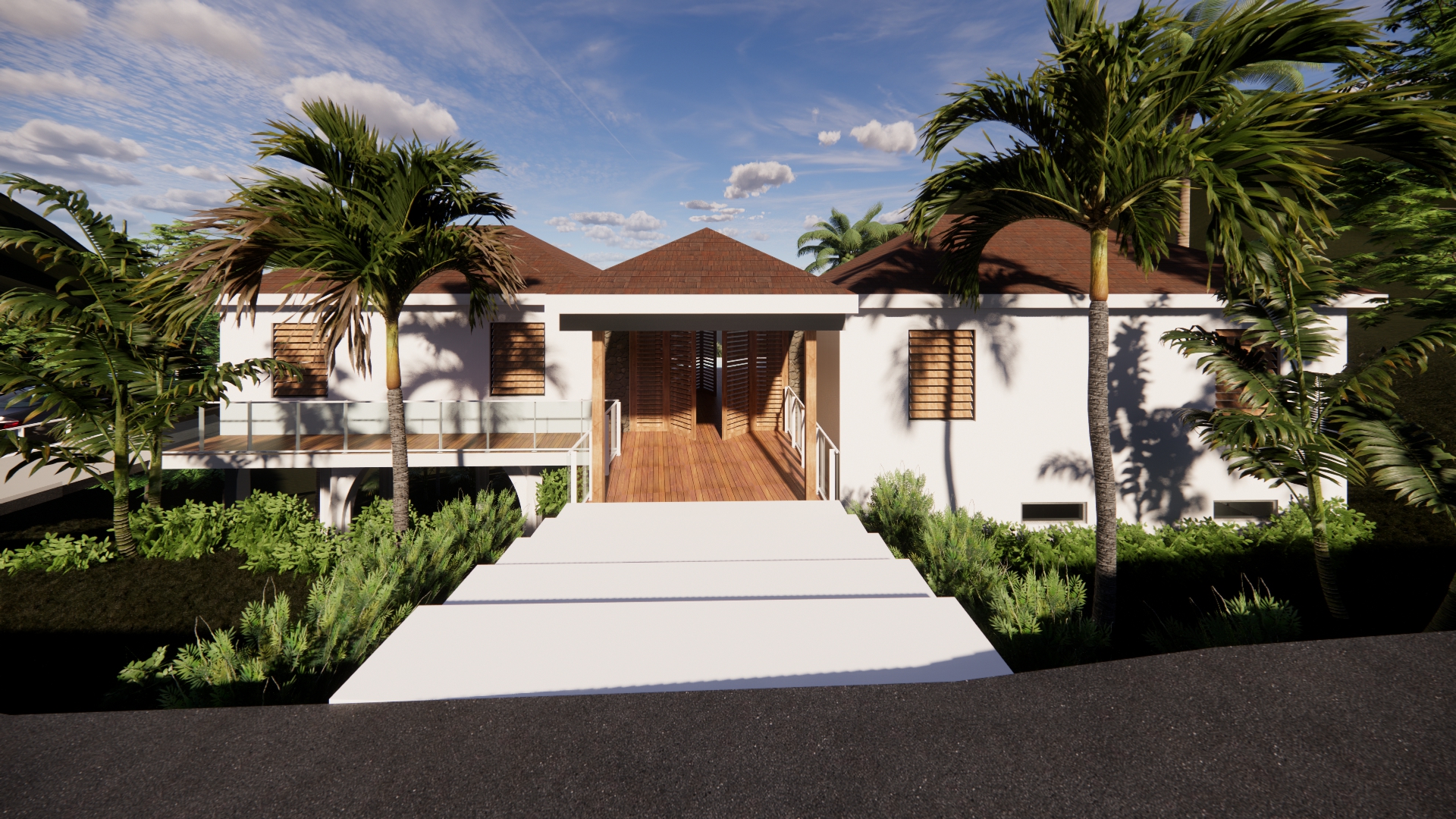
Saba
We always consider it an honor to work on a project on Saba. With approximately 13 square kilometers and around 2,000 inhabitants, Saba is a small island with a very distinct identity. Known as the Unspoiled Queen, the island is characterized by its dramatic volcanic landscape, steep slopes, lush vegetation and Mount Scenery, which rises to 887 meters above sea level. Its geological origins and mountainous terrain have shaped not only the natural environment, but also the way people live, build and interact with their surroundings.
Working in a small community means that every building has a significant impact on the daily living environment of the island’s inhabitants. This brings a particular responsibility. We believe it is essential to understand the character of the island before designing anything. Architecture should not simply be placed within the landscape, but should respond to its specific conditions and become part of its surroundings. Strong winds, significant differences in elevation and the specific conditions of building on volcanic slopes all influence how a building should be positioned, designed and constructed.
To understand these conditions, we invest time in analyzing the landscape and its development. We study historical maps, spatial data, topography, vegetation, accessibility and the surrounding built environment. By comparing historical and contemporary maps, we can understand how the island has evolved and identify the elements that give each place its character. This research forms an important foundation for our designs.
Even though Saba is a special municipality within the Dutch Kingdom and have to comply to Dutch regulations, the reality is often different. What may seem like a logical design solution from a Dutch perspective does not necessarily work in the same way on Saba. Differences in construction methods, available resources and the everyday use of buildings can have a considerable impact on how a project functions in practice. This is why we look beyond the formal brief and technical requirements.
But understanding Saba goes beyond its physical landscape. With a population of approximately 2,000 people, the island has a close-knit community and a strong cultural identity. Local traditions, social relationships and everyday habits play an important role in how spaces are used and experienced. We find it important to engage with residents and understand their needs, customs and expectations.
For us, designing on Saba means finding a balance between the requirements of a building, the character of the landscape and the needs of the local community. By combining a thorough understanding of the local context with climate-responsive design, appropriate construction principles and human-scale details, we create places that belong to their surroundings.